System Modules Walkthrough
Browse through the 12 functional dashboards and operational interfaces of the portal.
Module 1: Dashboard
Global operations health, system uptime metrics, active alerts, and quick action nodes.
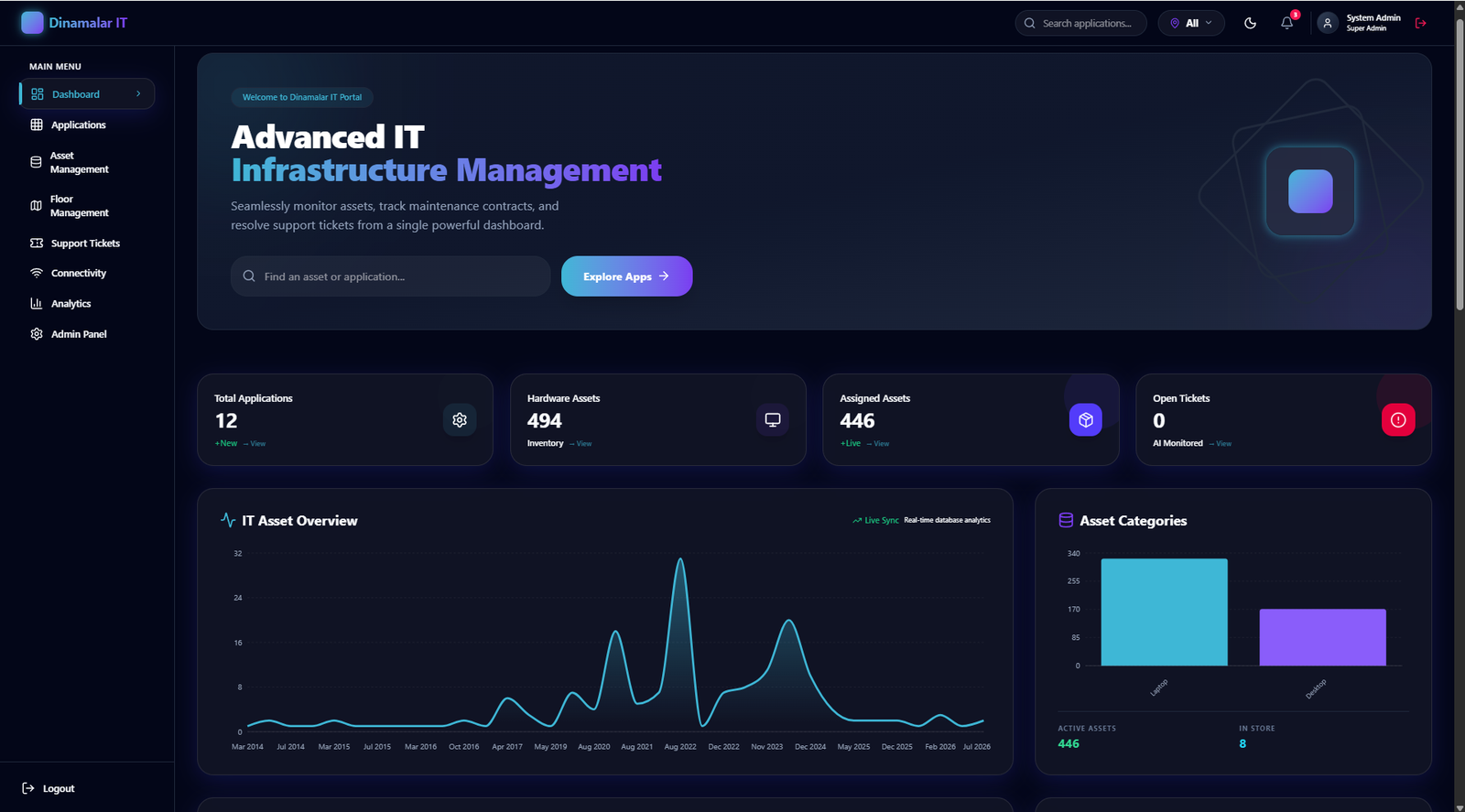
Module 1: Dashboard Overview
Central console monitoring key performance indicators, live user counts, and active security incidents.
Module 2: Applications Screen
SSO-backed applications page for launching company-wide editorial and workflow tools.
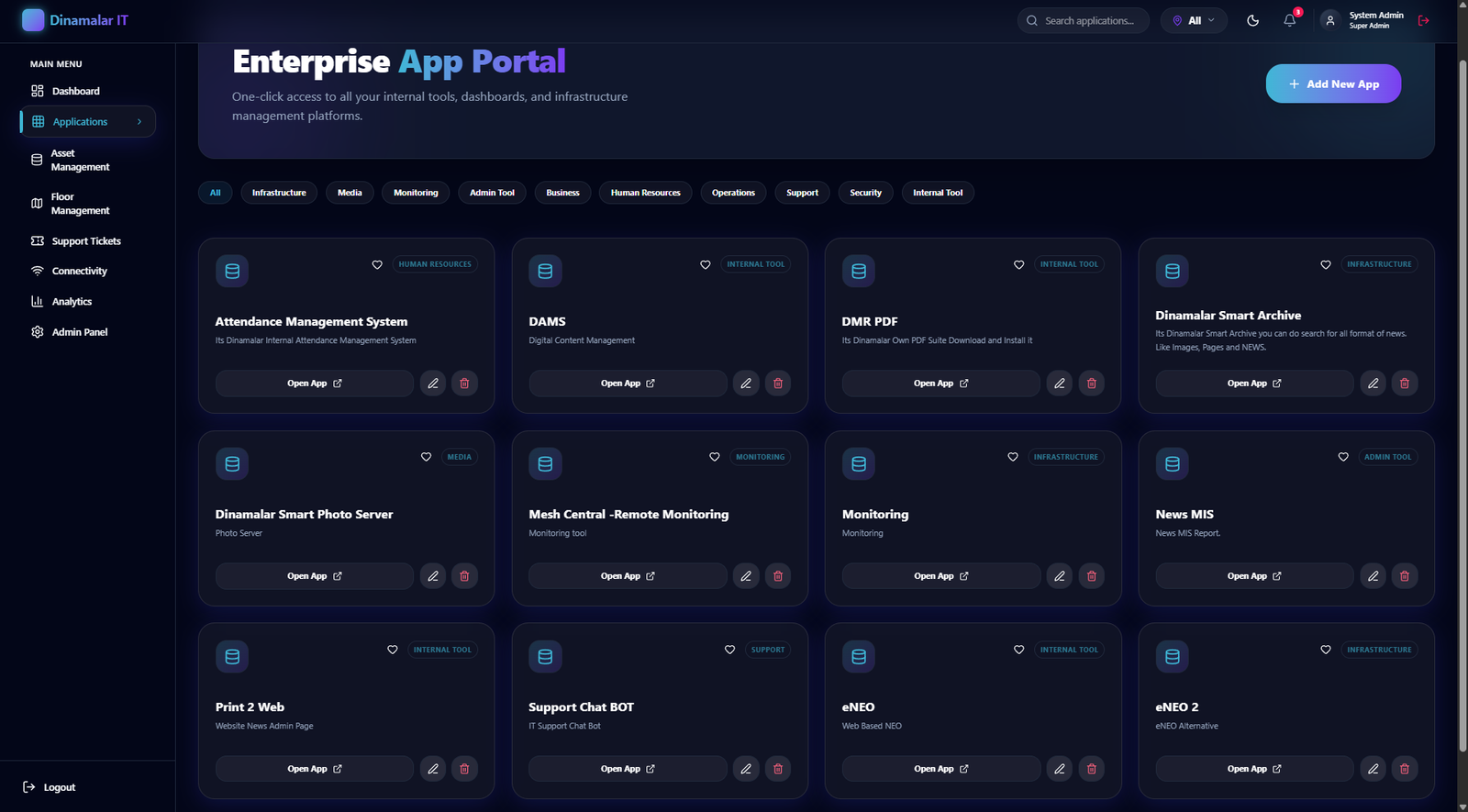
Module 2: Applications Portal
Central landing dock for staff to authenticate and launch company-wide editorial and workflow tools.
Module 3: Asset Management Page
Full hardware catalog with warranty statuses, assigned users, and procurement records.
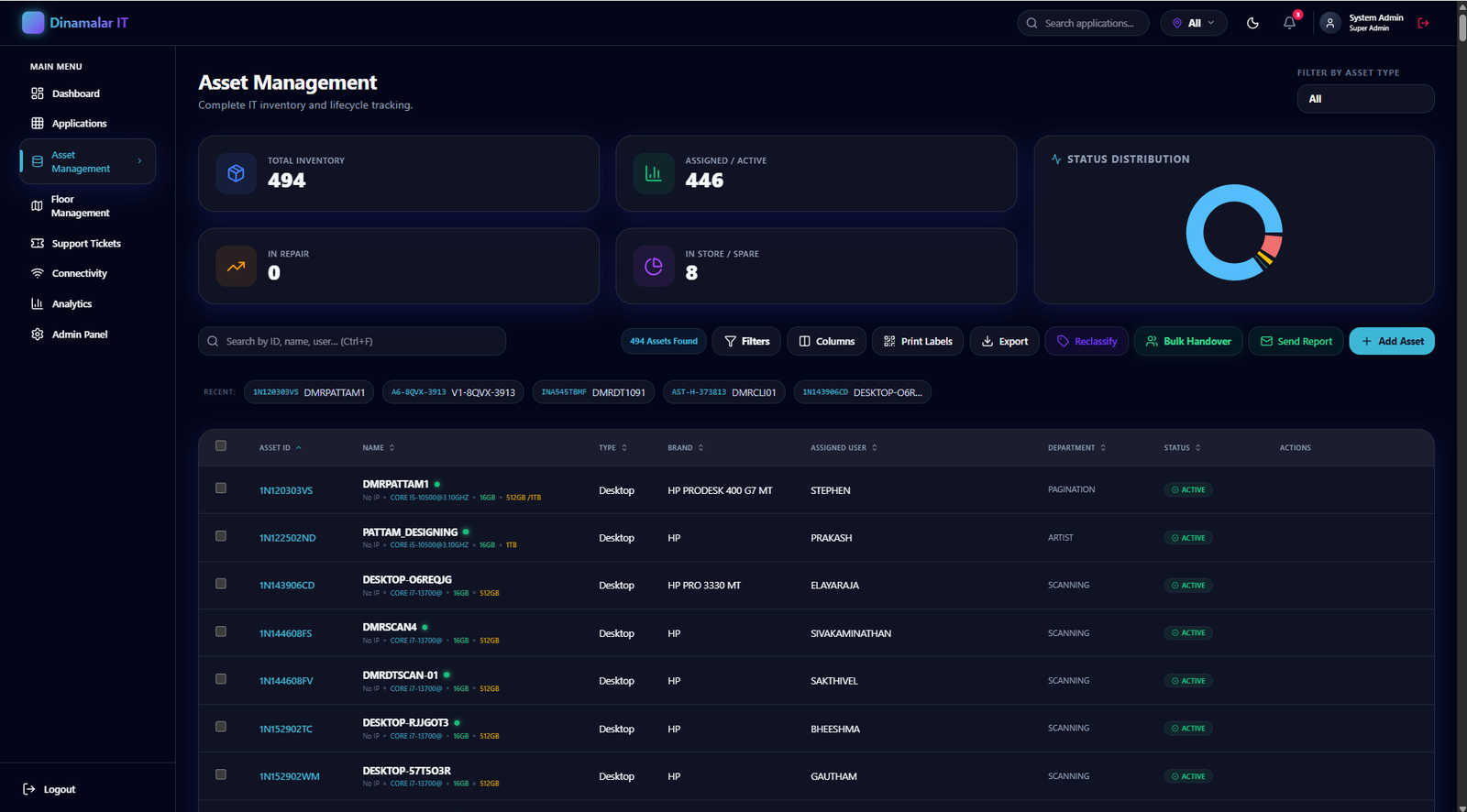
Module 3: Hardware Asset Management
Track complete physical inventories from servers and network switches down to individual employee workstations.
Module 4: Floor Management Page
Interactive visual map showing endpoint positions and network nodes across office floors.
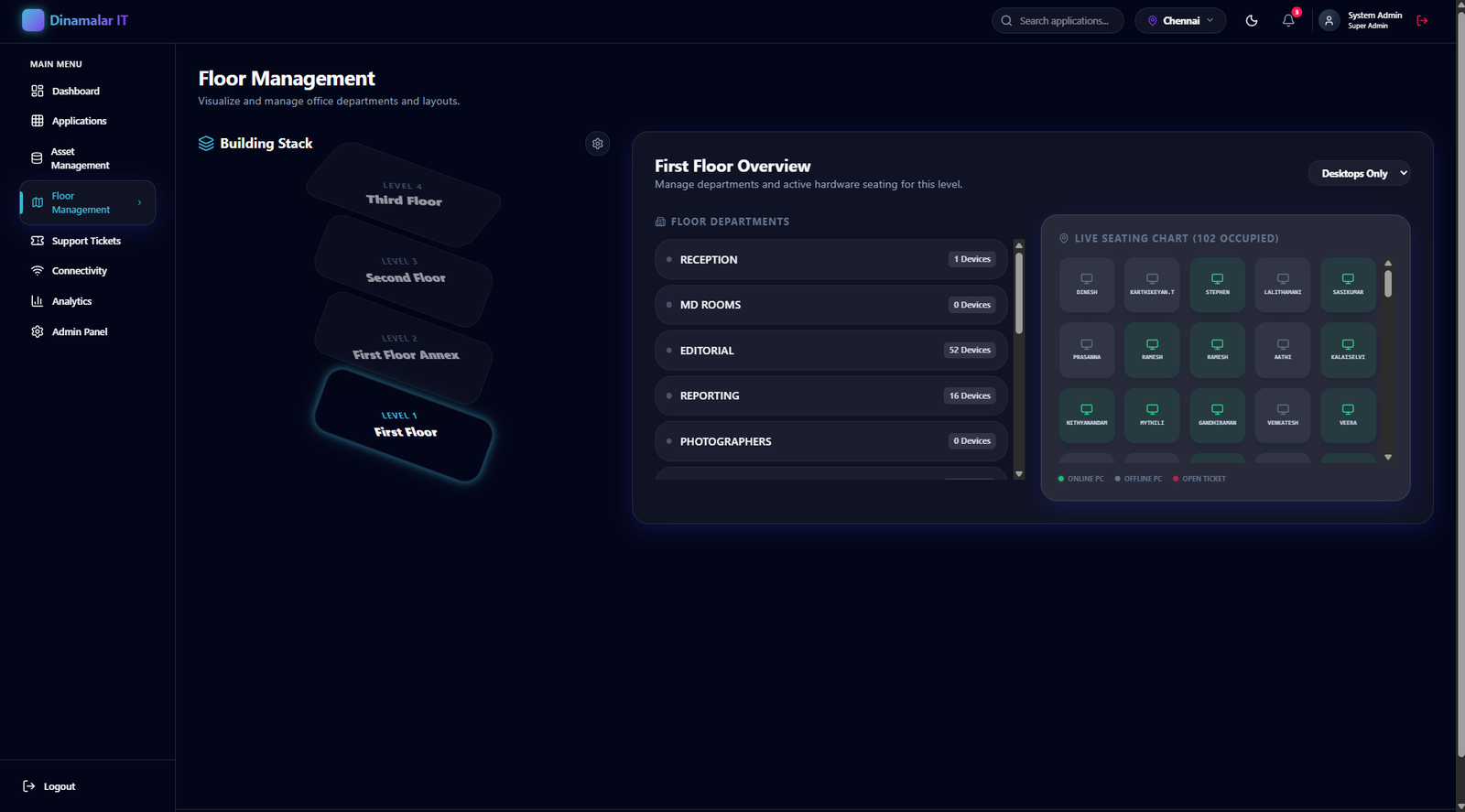
Module 4: Floor Layout & Mapping
Monitor logical endpoint connections and network drop locations layout-by-layout.
Module 5: Support Ticket Panel
Helpdesk queue containing escalated chatbot logs, ticket statuses, and technician assignments.
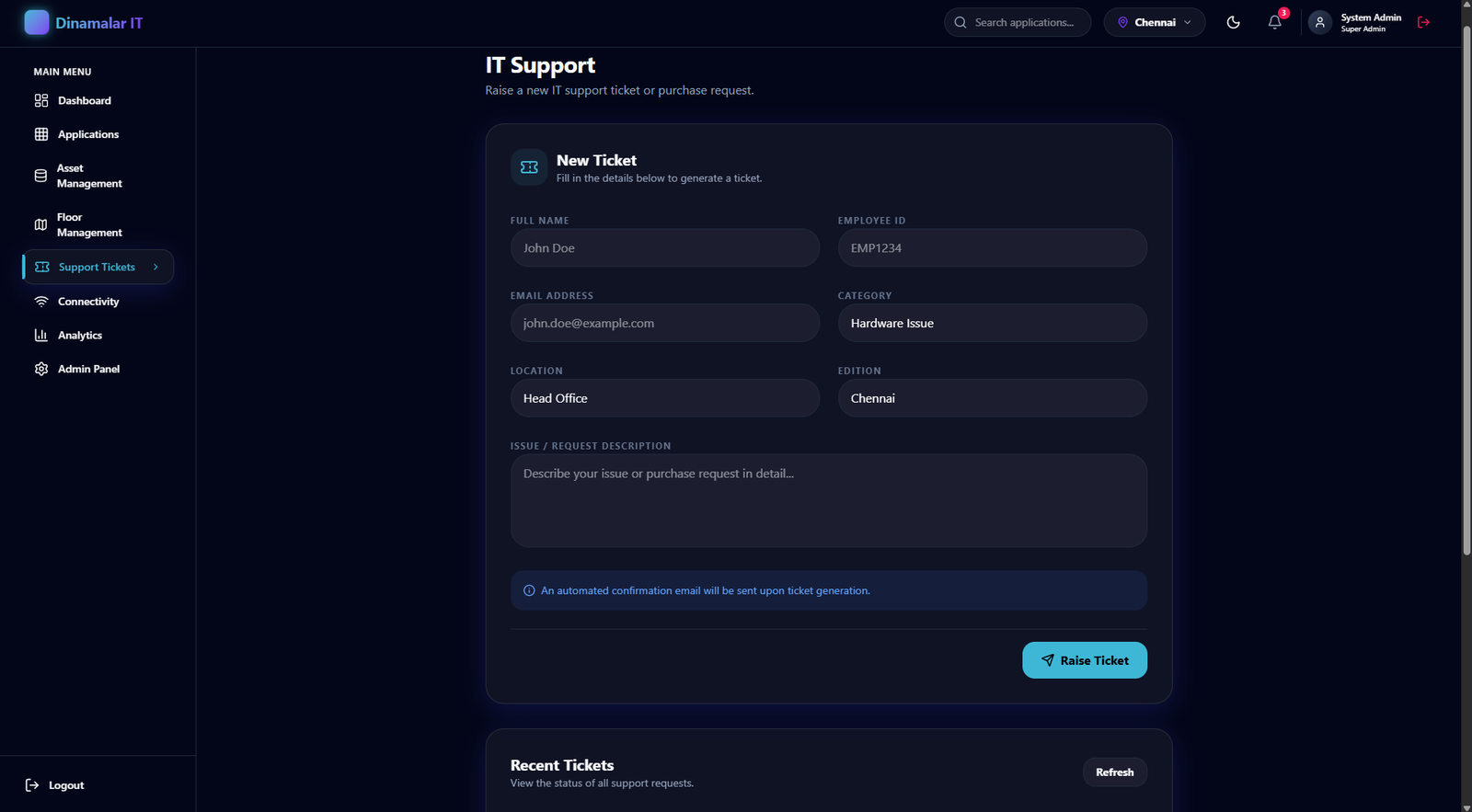
Module 5: IT Helpdesk Integration
Bridges user feedback to support queues and monitors incident routing status.
Module 6: Telecom & ISP Management
Live status monitoring for enterprise fiber connections, VPN channels, and ISP failovers.
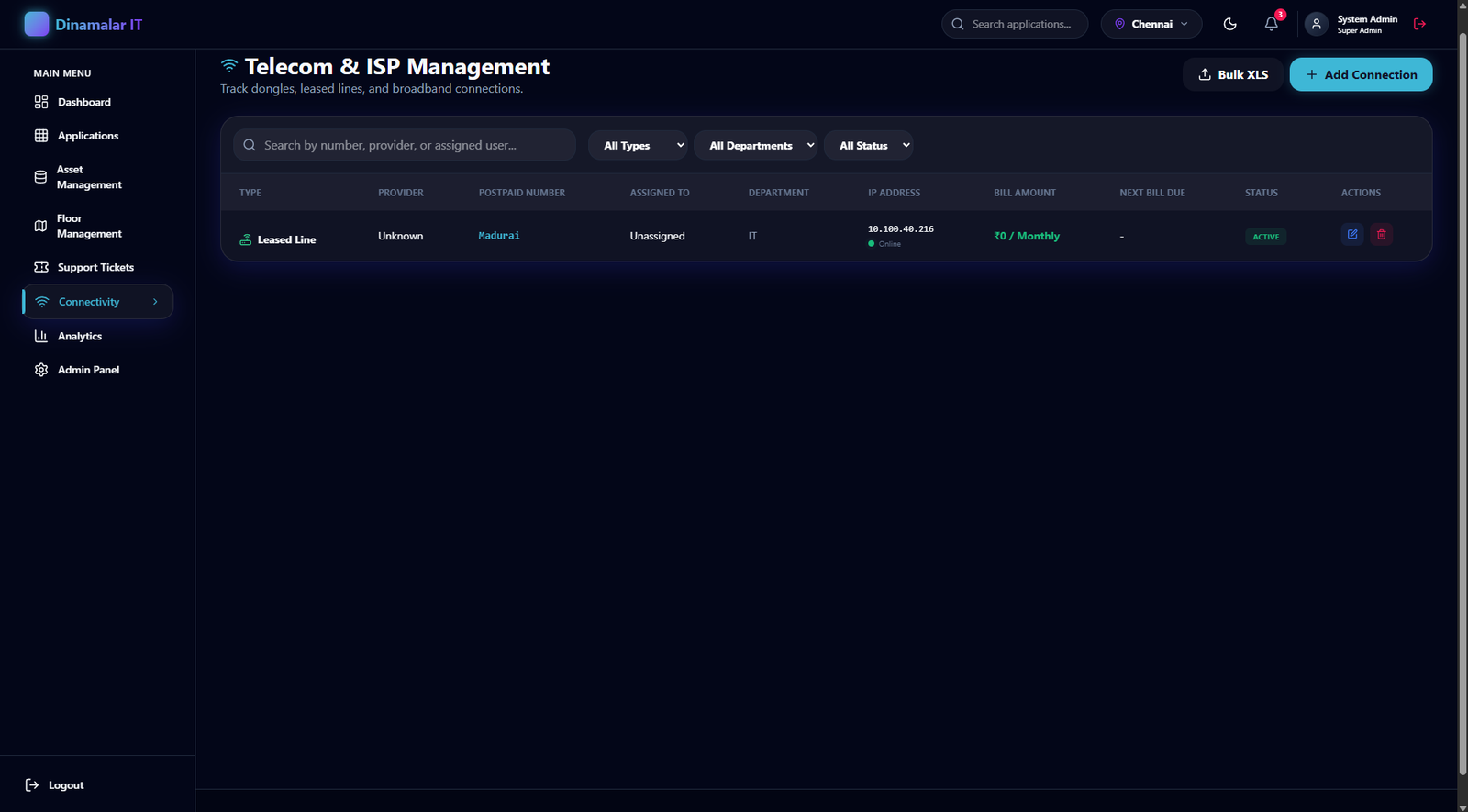
Module 6: ISP Network Status & Telemetry
Monitors regional network links, fiber pings, and ISP status telemetry.
Module 7: Analytics & Report Page
Tracks department resource trends, network traffic spikes, and inventory lifetimes.
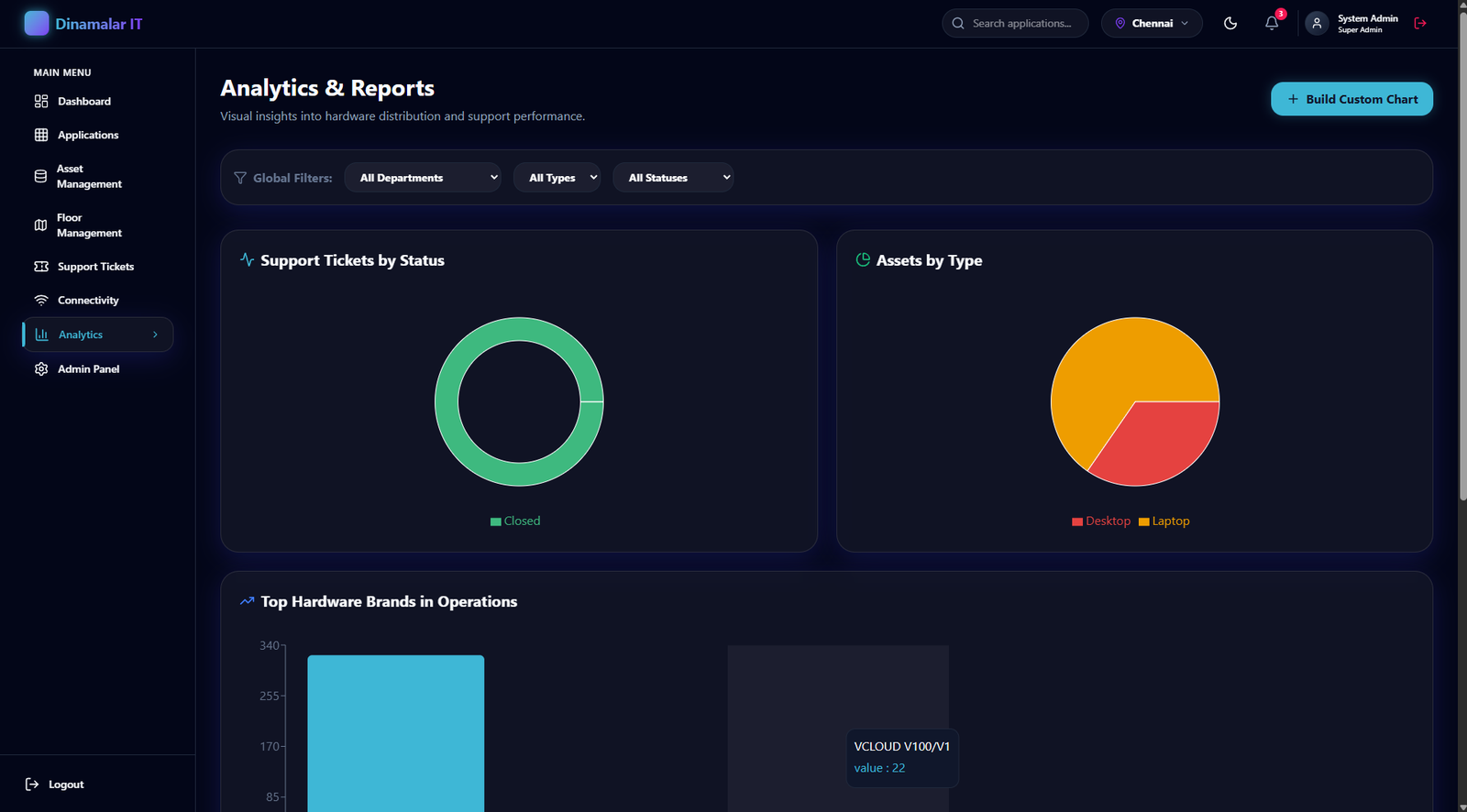
Module 7: IT Budget & Resource Reports
Review hardware distribution trends and forecast next quarter hardware purchase plans.
Module 8: Admin Control Panel
Role-based access controls, AD settings, and unalterable administrator session logs.
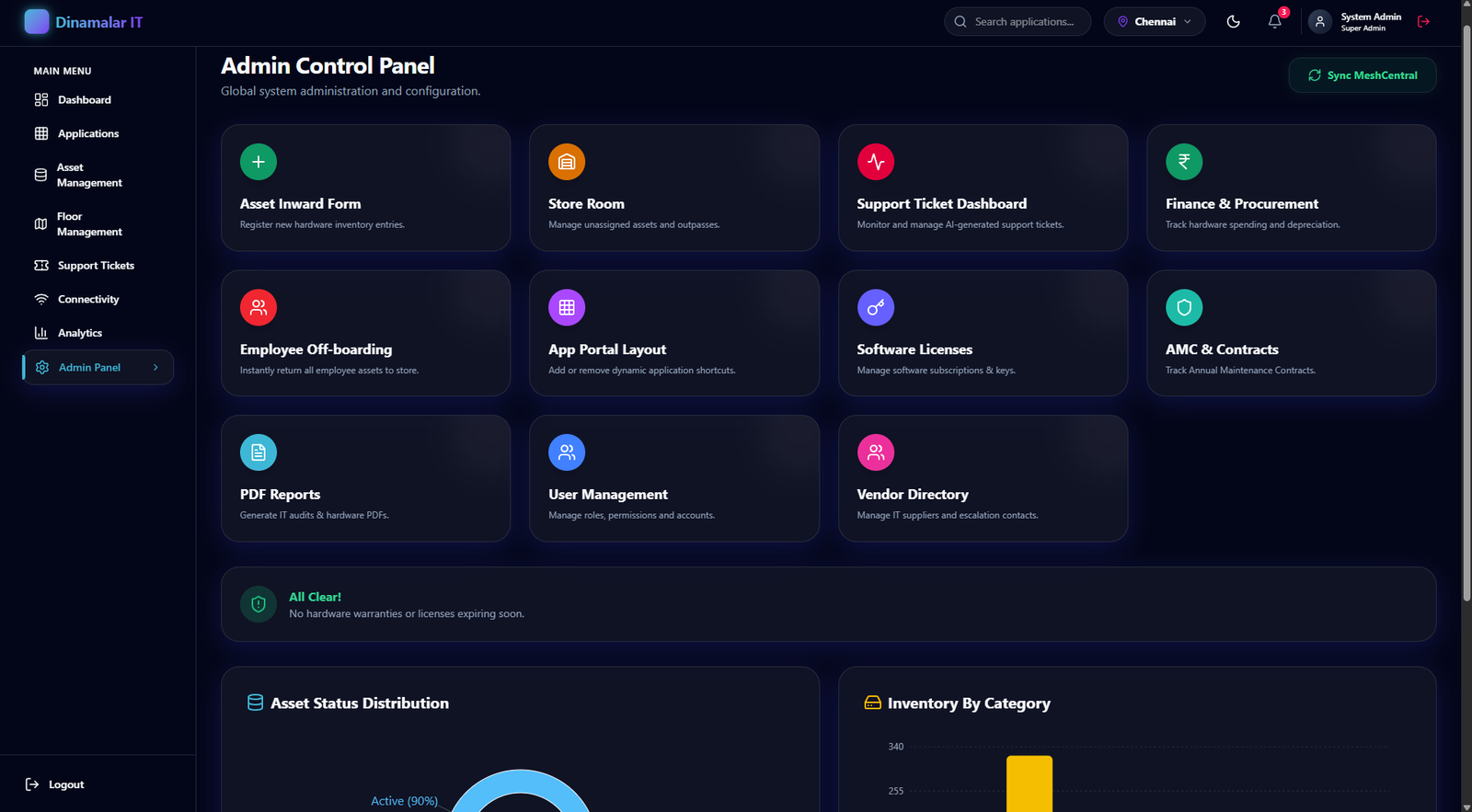
Module 8: Access Management & Audit Logs
Configure team permissions and view system access histories for compliance.
Module 9: About Page (System Overview)
Overview of the system architecture, core frameworks, and initial platform installation guidelines.
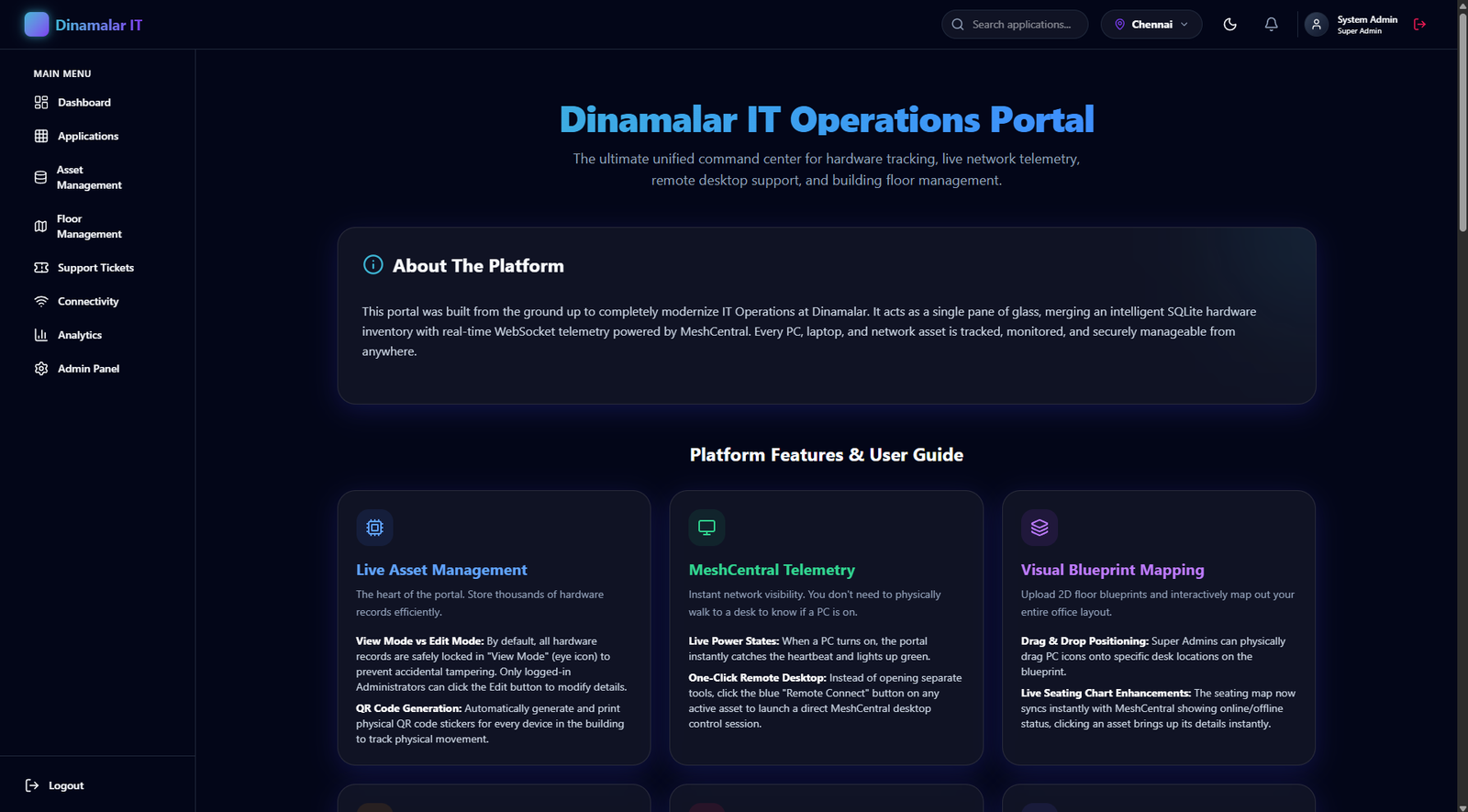
Module 9: Platform Architecture Documentation
Review key documentation regarding Node.js gateway and SQLite schema.
Module 10: About Page (Security Protocols)
Guidelines for technicians covering user provisioning, network security configurations, and permissions setup.
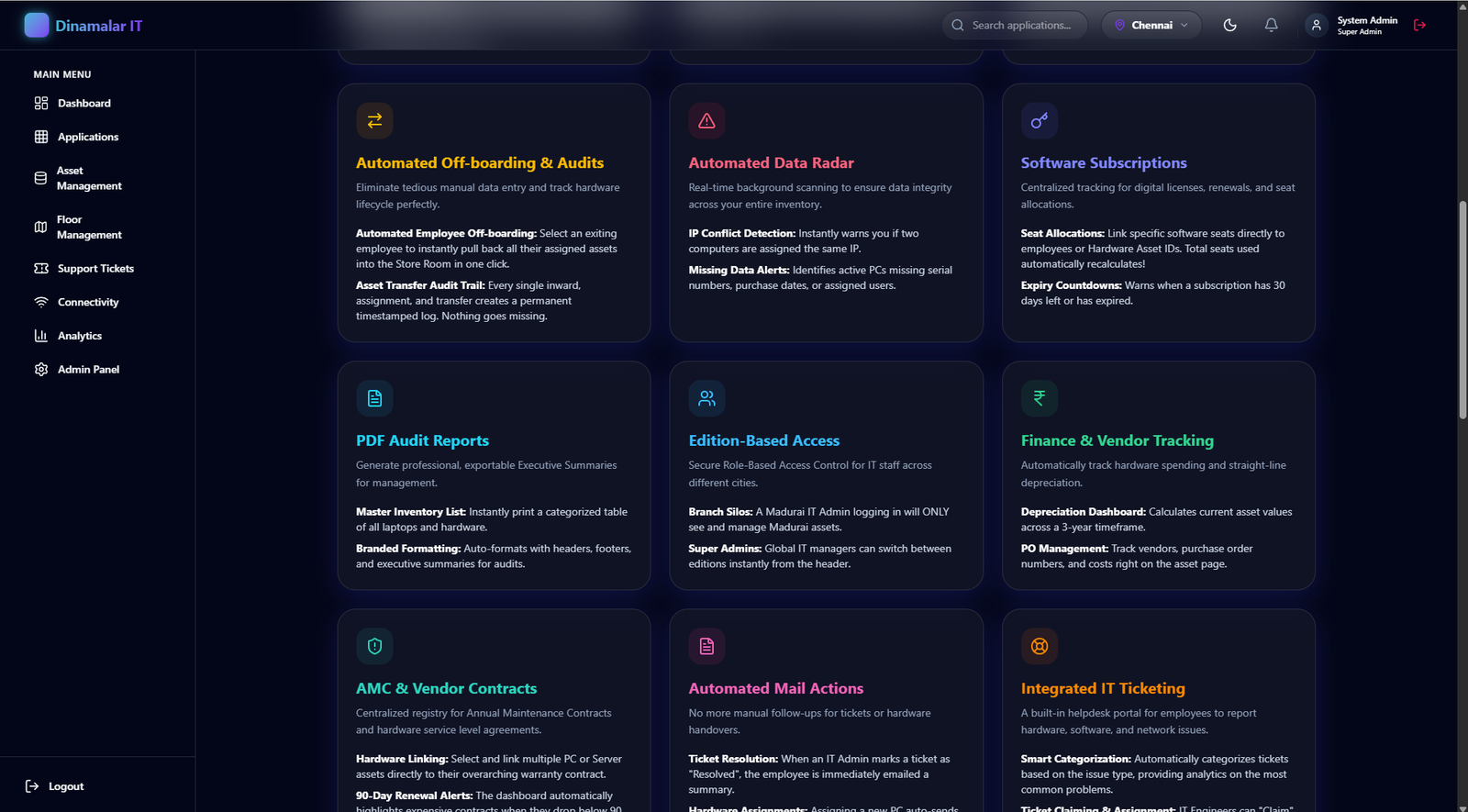
Module 10: User Access & Security Protocols
Documentation on roles and permissions setup for security clearance.
Module 11: About Page (Subnet Configuration)
Subnet details, firewall settings, and instructions for resolving telemetry alerts.
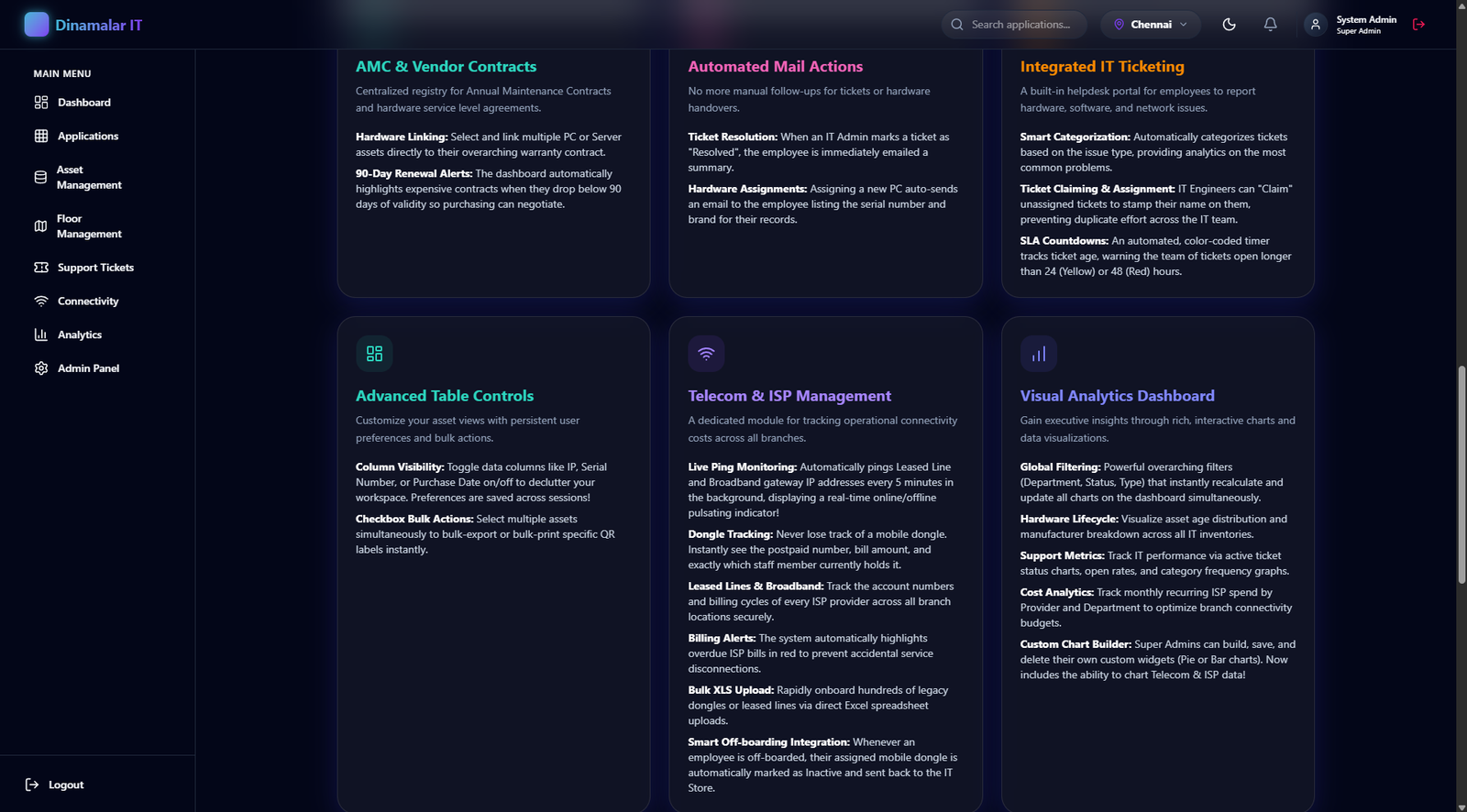
Module 11: Subnet & Firewall Configuration Guide
Step-by-step guides on configuring regional gateways and VPN nodes.
Module 12: About Page (Disaster Recovery)
Backup schedules, database checks, disaster recovery workflows, and secondary failover protocols.
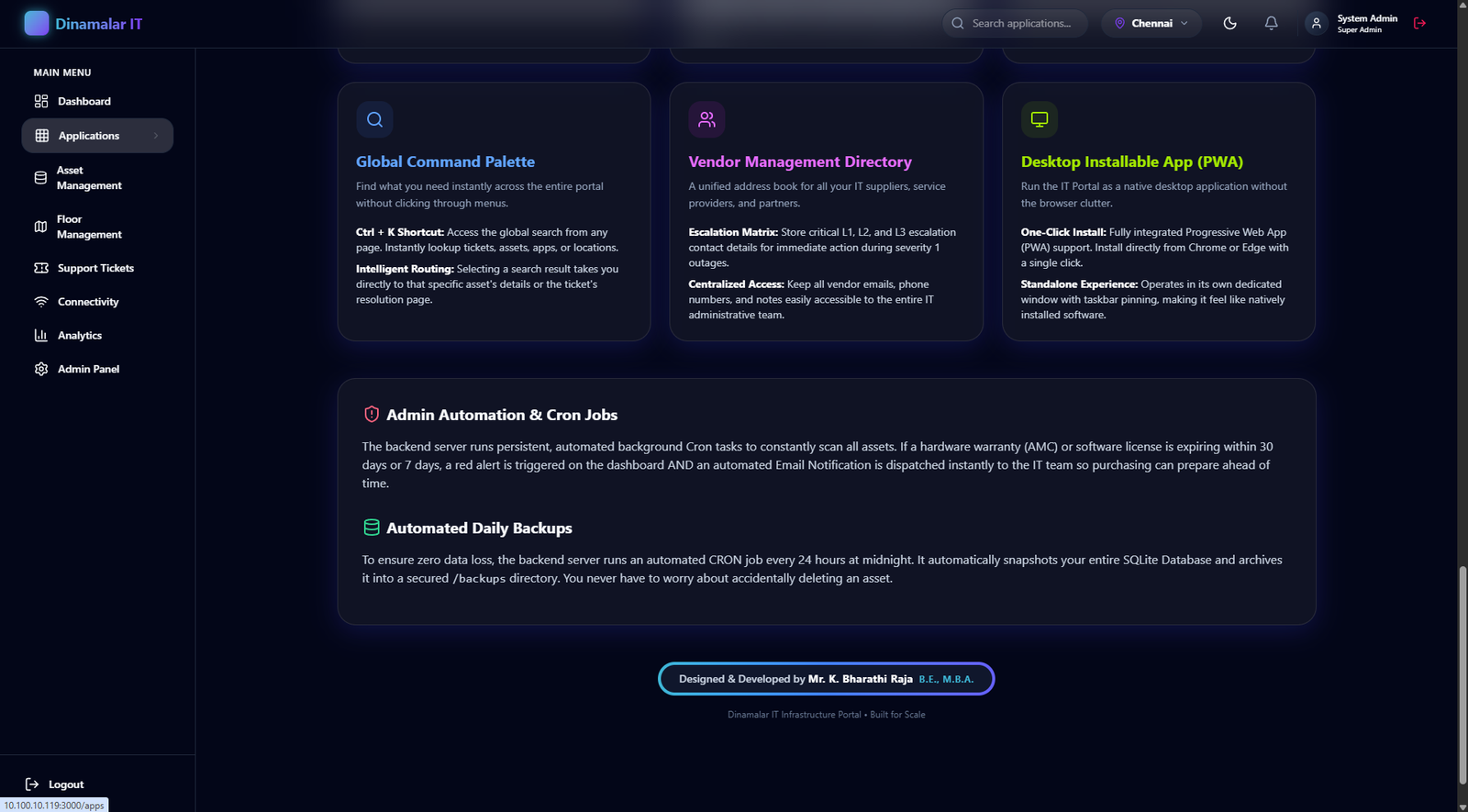
Module 12: Disaster Recovery & Failover Systems
Technician reference logs for secondary system boots and database redundancy.